Oman's green hydrogen ambition
Oman has set a national goal of net-zero emissions by 2050 and identified green hydrogen as a key pillar of economic diversification under Vision 2040. Hydrogen Oman (Hydrom) manages the allocation of land blocks for large-scale green hydrogen projects, with areas in Al Wusta (around Duqm) and Dhofar offering excellent solar and wind resources, available land and access to ports.
How green hydrogen is produced
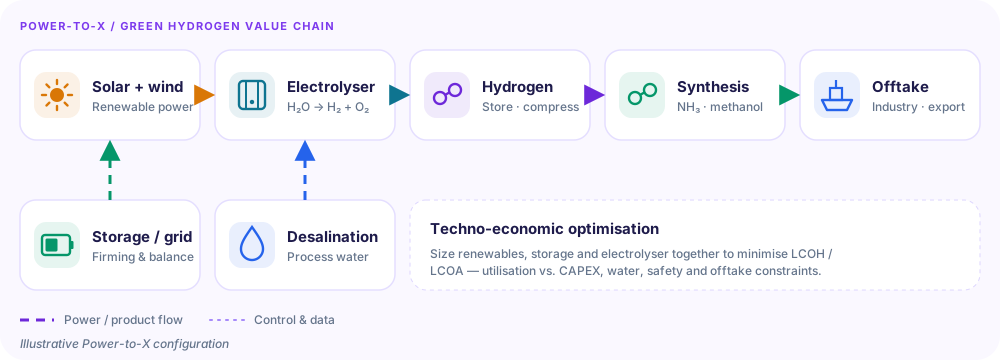
Green hydrogen is produced by electrolysis of water using renewable electricity. In Oman, projects typically combine large solar and wind farms, electrolysers, desalination for water supply and — for export — conversion to ammonia or other carriers that are easier to ship.
Key technical risks
- Renewable variability and electrolyser utilisation
- Electrolyser performance, degradation and supply chain
- Water sourcing, desalination and brine management
- Hydrogen and ammonia safety, storage and handling
- Grid or off-grid configuration and power system stability
- Environmental permitting and stakeholder requirements
Designing for the lowest cost of hydrogen
The balance between wind, solar, storage and electrolyser capacity determines the levelised cost of hydrogen. Wind in Dhofar can complement solar by generating at night and during the Khareef, raising electrolyser utilisation. Hourly techno-economic modelling is essential to find the optimum.
From concept to bankable project
Large hydrogen projects need the same disciplines as other infrastructure — resource assessment, feasibility, environmental permitting, independent due diligence and owner's engineering — applied to a more complex, integrated system. VESS supports these stages through its Power-to-X advisory and wider renewable engineering capabilities.
Frequently asked questions
What is Hydrom?
Hydrogen Oman (Hydrom) is the entity responsible for managing Oman's green hydrogen programme, including the allocation of land for large-scale projects.
Why is Oman suited to green hydrogen?
Oman combines strong solar and wind resources, large areas of available land, access to ports and a national strategy supporting hydrogen development.
Why convert hydrogen to ammonia?
Ammonia is easier and cheaper to store and ship over long distances than hydrogen, making it a common export carrier.